
What Your Soil Can Tell You Before You Buy Another Fertilizer?
Photo: Maël BALLAND
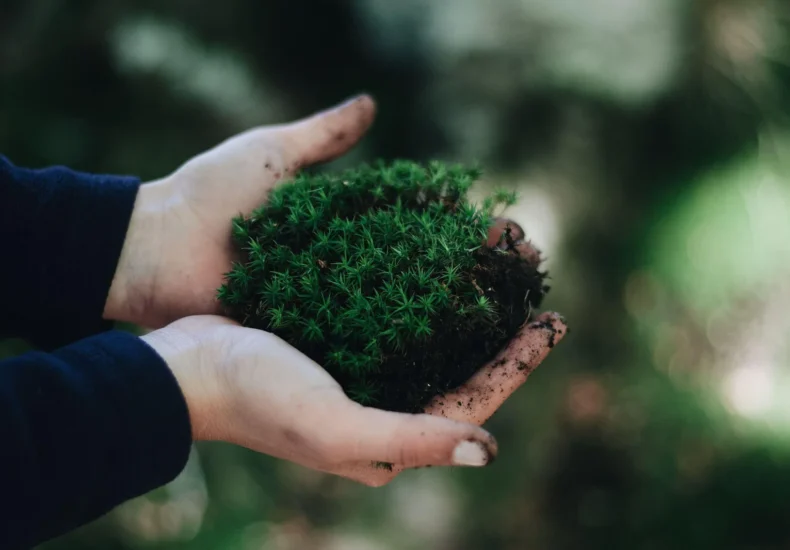
Take a small handful of damp garden soil and hold it up in the morning light…
To the naked eye, it looks like simple brown dirt. It feels cool, crumbles between your fingers, and leaves dark smudges across your palms. Most people toss it aside without a second thought, assuming it is merely an anchor to keep plant stems upright while they reach for the sun.
This week, science feeds and lifestyle channels have been buzzing with conversations about microscopic ecosystems and how invisible biological networks shape our living world. People are starting to realize that the human gut, the forest canopy, and the garden plot all share a common theme.
True wellness is rarely an accident of surface treatments. It is governed by a subtle, highly intricate internal chemistry.
When we try to bypass that natural system with harsh shortcuts, the whole structure begins to wobble.
The Myth of Pure Nutrition
For decades, modern gardening was taught as a straightforward mathematical equation.
If your plant seems sluggish, add nitrogen for greener leaves. Add phosphorus for brighter flowers. Add potassium for sturdy stems.
Generations of gardeners grew up believing that plants eat fertilizer like livestock eating grain from a trough. You pour synthetic salts into the earth, and the roots drink them up.
Yet anyone who has spent real time tending difficult plots knows that this sterile model fails constantly.
You can drench a bed in expensive inputs, only to watch leaves turn pale yellow, edges scorch into dry lace, and blossoms drop off before setting fruit.
The problem is not a lack of plant food in the dirt. The real issue is biological bioavailability.
Plants do not live in test tubes. Their root systems cannot absorb raw elemental minerals unless the surrounding soil environment is chemically and biologically hospitable.
If the acidity level in your soil is locked at the wrong balance, those expensive nutrients become chemically bound to mineral particles. They sit trapped in the dirt, completely out of reach. The plant remains starved while resting directly on top of a feast.
Decoding the Subterranean Conversation
Understanding what actually happens in the root zone requires us to abandon the idea of dirt as an inert sponge.
Soil is a lively, bustling neighborhood.
When a seed sprouts and pushes its first white root downward, it immediately begins releasing organic compounds known as root exudates. These secretions are essentially chemical signals drifting through the dark earth.
They act as an invitation, calling specific species of beneficial bacteria and microscopic fungi to gather directly around the root surface.
In exchange for sweet carbon sugars produced by the plant through sunlight, these microorganisms go to work as a subterranean processing crew. They break down dense organic material, liberate locked phosphate molecules, and convert raw nitrogen into organic forms that tender root cells can drink without burning.
It is an ancient, cooperative rhythm perfected across millions of years.
When we bombard this delicate community with heavy synthetic salts, we shatter the truce. High salt concentrations pull vital moisture straight out of microbial cells, leaving the root zone sterile, compacted, and dependent on endless artificial feeding.
An Ancient Solution to Modern Depletion
Rebuilding that natural conversation requires looking backward rather than reaching for newer synthetic inventions.
Deep in lowland peat basins, nature preserved an astonishing archive of organic wisdom.
Over thousands of years, lush wetland vegetation settled into calm mineral groundwaters, protected from rapid decomposition. As centuries passed, this plant material compressed into dense black peat, naturally enriched with extraordinary concentrations of humic and fulvic substances.
These are not factory made additives. They are the natural building blocks of living earth.
Humic compounds act as structural architects in the soil. They loosen tight clay, improve pore spaces so roots can breathe oxygen, and dramatically boost moisture retention during long dry spells.
Fulvic substances operate at an even more intimate scale. Because their molecular structure is light and remarkably agile, they bind naturally with essential trace minerals, carrying them smoothly across plant cell membranes.
Instead of forcing growth through chemical shocks, these ancient substances act as biological facilitators. They wake up dormant colonies of beneficial soil bacteria, soften the ground, and restore the natural balance that lets roots do what they evolved to do.
A Founder Perspective on Soil Realities
Bridging the gap between laboratory science and backyard reality takes practical patience.
Olya Romanenko founded GroSuccess, a plant-care company offering organic fertilizers that contain humic and fulvic acid formulas for indoor and outdoor plants, specifically to bring this soil first philosophy to everyday growers who are tired of trial and error routines. Having spent years cultivating her own gardens and speaking directly with growers at weekend markets, Romanenko observed a persistent pattern of confusion.
People would show her pictures of struggling plants, convinced they needed a stronger pesticide or a heavier dose of chemical feed.
Romanenko gently nudged their attention beneath the surface.
Her work through GroSuccess centers on liquid formulas derived from ancient lowland black peat, designed to nourish the soil ecosystem rather than simply stimulating green leaves. As Romanenko often points out, you cannot solve a soil imbalance by pouring more fertilizer into the mix. If the ground is exhausted and the natural microflora have been wiped out, adding more salt only accelerates the decline.
Her focus is educational as much as practical. When gardeners understand that caring for a plant means caring for the invisible bacteria that feed its roots, the entire approach to cultivation transforms.
Success ceases to be a stressful exercise in emergency troubleshooting. It becomes a calm, steady process of stewardship.
The Tangible Proof of Living Dirt
What does a garden look like when its subterranean chemistry is running in harmony?
The answers do not show up in giant, watery vegetables with bland flavor, or sudden vegetative surges that collapse under the first strong gust of wind.
The results appear in deep structural stamina.
Roots grow thick, white, and extensive, spreading out wide nets that anchor the plant and drink moisture from deep within the ground.
Fruit ripens with rich, concentrated sweetness, developed because the plant had steady access to a wide spectrum of natural minerals rather than a single burst of synthetic salts.
Perennials and flowering shrubs hold their blossoms longer, displaying vivid, saturated colors that reflect genuine internal health.
Most importantly, the soil itself changes season by season. It turns dark, spongy, and cool. It smells sweet and earthy after a light rain. It becomes an inviting habitat for earthworms, beneficial beetles, and friendly pollinators that keep garden pests in balance naturally.
Stepping Back from the Quick Fix
We live in a culture that rewards fast outcomes and cosmetic polish.
It is easy to understand why gardeners get lured by flashy packaging promising instant results in forty eight hours. We want our gardens to flourish, and we want it to happen today.
True horticultural mastery requires a different kind of vision.
It asks us to honor the ancient living earth under our boots, to trust the quiet chemistry of natural organic matter, and to support the millions of microscopic allies waiting to work on our behalf.
Next time you step into your garden, look past the green leaves and colorful petals for a moment.
Think about the darkness beneath. Think about the ancient peat, the busy microbes, and the intricate web of life that sustains every breath of green above.
When we feed the living soil, nature takes care of the harvest.