
Why Your Website Design and SEO Strategy Need to Be Built Together — Not Separately
One of the most costly mistakes businesses make when investing in their online presence is treating website design and search engine optimization as two separate projects. The process often starts with hiring a web designer to create a visually appealing website. Months later, after the site launches, the business realizes that traffic is not coming in as expected. That’s when an SEO company gets called in, only to discover that the website’s structure, content organization, and technical setup are working against search engine visibility.
By that point, the business has already invested significant time and money into a website that may need substantial revisions. New pages must be created, navigation needs restructuring, technical issues require fixing, and content gaps become apparent. Instead of building momentum from day one, the company is forced into a second round of development simply to make the website capable of competing in search results.
This situation is incredibly common, and the true cost extends far beyond redesign expenses. Every month a website exists without proper SEO foundations is a month of missed opportunities, lost visibility, and potential customers finding competitors instead.
The reality is simple: website design and SEO should never operate independently. They are most effective when planned and executed together from the very beginning.
Search Engines Evaluate More Than Content
Many business owners assume SEO is primarily about adding keywords to a page after a website is built. While keywords remain important, modern search engines evaluate hundreds of factors when determining rankings.
Some of the most influential ranking signals are directly tied to how a website is designed and developed. These include:
- Page speed
- Mobile responsiveness
- Site architecture
- URL structure
- Internal linking
- User experience
- Navigation hierarchy
- Crawlability
- Core Web Vitals
- Content organization
A website that loads slowly on mobile devices immediately starts at a disadvantage. Studies consistently show that users abandon websites when pages take too long to load, and search engines recognize this behavior. If visitors leave before interacting with the site, rankings suffer.
Similarly, search engines need to understand how pages relate to one another. A website with a logical structure helps search engines determine which services, products, and topics are most important. When pages are disconnected, buried deep within navigation, or poorly organized, search engines struggle to interpret the site’s relevance.
These aren’t SEO adjustments that happen after launch. They’re decisions made during the planning, design, and development stages. Once a site is built incorrectly, fixing these foundational issues often requires significant restructuring.
Keyword Research Should Shape the Website Structure
One of the biggest misconceptions about keyword research is that it only helps determine what words to include on a page. In reality, keyword research should influence the entire architecture of a website.
The phrases people search for reveal how they think about a service or product. Those insights should guide decisions about:
- Which pages need to exist
- How services should be grouped
- Navigation menu structure
- Page titles
- URL organization
- Content hierarchy
Businesses often organize their websites according to internal operations rather than customer behavior.
For example, a home services company may divide its website into broad categories such as Residential Services, Commercial Services, and Emergency Services. While that structure makes sense internally, search data may reveal that customers are searching for specific services and locations instead.
Potential customers aren’t typing “Residential HVAC Services” into Google. They’re searching for terms like:
- Furnace repair Roanoke VA
- AC installation Salem VA
- Heat pump replacement near me
- Emergency HVAC repair
Each of these searches represents a unique opportunity to create a dedicated page that directly addresses a customer’s need.
When keyword research is conducted before website development begins, those opportunities can be incorporated into the site’s structure from the start. The result is a website that aligns with how customers search rather than how the business organizes itself internally.
This strategic alignment creates a stronger foundation for long-term organic growth.
User Experience and SEO Are Closely Connected
Website design is often viewed primarily as a visual discipline. Business owners naturally want a site that looks modern, professional, and reflects their brand.
While aesthetics matter, user experience plays an equally important role.
Search engines increasingly measure how users interact with websites. If visitors arrive and immediately leave, that’s a signal that the page may not be meeting expectations. If users struggle to find information, navigate the site, or complete a desired action, search engines take notice.
Effective website design balances appearance with functionality.
A well-designed website should make it easy for visitors to:
- Understand what the business offers
- Navigate to relevant information
- Contact the company
- Request a quote
- Schedule an appointment
- Make a purchase
Every additional obstacle reduces conversion rates and weakens performance.
When SEO and design teams collaborate from the beginning, user journeys can be mapped alongside search intent. Pages can be designed not only to rank but also to convert visitors into customers.
The result is a website that serves both search engines and human users effectively.
Technical SEO Starts During Development
Technical SEO is another area where businesses often run into problems after launch.
Many website owners assume technical optimization can be added later. While some improvements are possible post-launch, many technical elements are far easier and more cost-effective to implement during development.
Examples include:
- Clean code structure
- Schema markup implementation
- Mobile optimization
- Image compression
- XML sitemap creation
- Secure HTTPS configuration
- Redirect planning
- Canonical tag setup
- Indexation controls
When developers build a website without considering these factors, SEO professionals frequently inherit a site with technical limitations that require extensive fixes.
By contrast, websites developed with SEO involvement from the beginning launch with these elements already in place, allowing marketing efforts to gain traction immediately.
Why Paid Advertising Depends on Website Quality
The relationship between website design and digital marketing extends beyond organic search.
Businesses investing in Google Ads, PPC campaigns, and other paid advertising channels often focus heavily on ad performance while overlooking the website experience that follows the click.
Every visitor arriving through a paid advertisement represents a cost. Whether the click costs $5 or $50, the goal is the same: convert that visitor into a lead or customer.
If the landing page loads slowly, lacks clarity, or creates friction in the conversion process, advertising budgets are wasted.
Google also evaluates landing page quality through its Quality Score system. Factors such as relevance, user experience, page speed, and content quality influence ad performance.
Higher-quality landing pages often lead to:
- Lower cost per click
- Better ad placement
- Higher click-through rates
- Improved conversion rates
- Greater return on ad spend
This means website quality directly affects advertising efficiency.
The most successful campaigns occur when ads, landing pages, and conversion paths are designed together as part of a unified strategy.
Content Marketing Builds Long-Term Momentum
A website is not a static asset. The strongest-performing websites continue growing through ongoing content development.
Content marketing creates opportunities to rank for additional search terms, answer customer questions, and establish authority within an industry.
Every high-quality piece of content becomes a potential entry point for future customers.
A well-written blog post can generate traffic for years after publication. Educational resources, service guides, FAQs, case studies, and industry insights all contribute to expanding a website’s visibility.
The challenge is that content performs best when it is supported by a strong website foundation.
Without proper site architecture, internal linking, and optimization, even excellent content may struggle to reach its full potential.
When content strategy is integrated into website planning, each new piece of content strengthens the overall SEO ecosystem rather than existing in isolation.
Social Media Amplifies the Entire Strategy
Social media serves as another important piece of the digital marketing puzzle.
While social signals may not directly determine search rankings, social platforms help amplify content, build brand awareness, and drive traffic back to a website.
Businesses that consistently publish valuable content across social channels create additional opportunities for engagement and visibility.
When website design, SEO, content marketing, and social media work together, each channel reinforces the others.
A blog post can support SEO efforts while providing content for social media. Social engagement can drive traffic to optimized landing pages. Those landing pages can generate leads that fuel business growth.
This interconnected approach creates compounding results over time.
The Businesses That Win Take an Integrated Approach
The businesses that struggle online often pursue disconnected tactics. They launch a website without SEO planning. They run paid ads without optimizing landing pages. They post on social media without a content strategy. Each effort exists independently, limiting overall performance.
The businesses that consistently grow take a different approach.
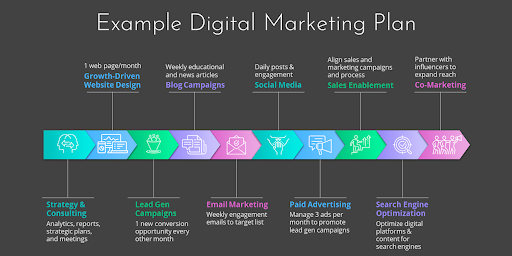
They view digital marketing as an integrated system rather than a collection of separate services. Website design, SEO, content marketing, paid advertising, and social media are planned together, with each component supporting the others.
When SEO is considered during website development, the site launches with a strong foundation. When content strategy informs site architecture, pages align with real search demand. When landing pages are built with conversions in mind, advertising becomes more effective.
The result is not simply a better-looking website. It is a digital asset that attracts visitors, generates leads, supports marketing efforts, and continues producing value long after launch.
In today’s competitive online environment, businesses can no longer afford to treat website design and SEO as separate projects. The strongest results come when both are built together from the very beginning.