
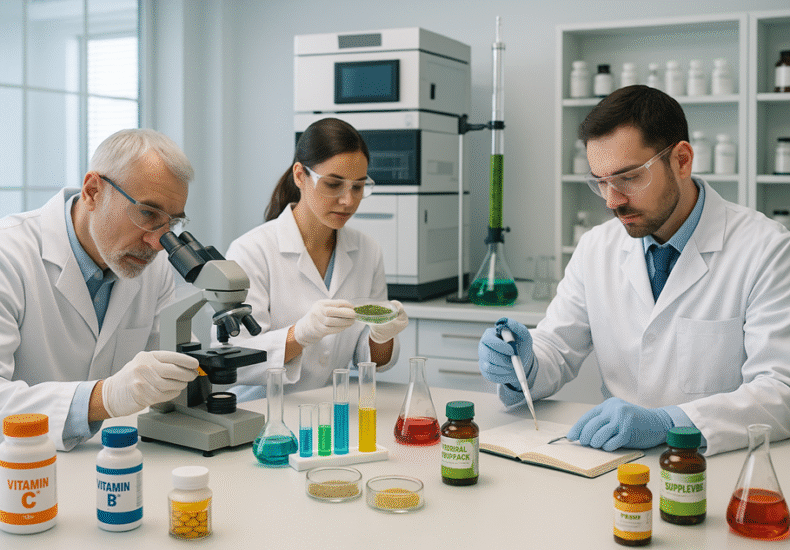
Why Nutraceutical Testing Matters for Product Safety and Market Success
Walk into any pharmacy or health store today, and you’ll find shelves lined with nutraceutical products promising everything from immune support to improved energy and heart health.
This growing industry reflects consumer demand for preventive wellness and natural solutions. But behind the labels and marketing claims lies an essential safeguard: nutraceutical testing.
Testing ensures that the capsule, powder, or liquid in a bottle truly delivers what it claims, free from harmful contaminants and aligned with regulatory expectations. Without rigorous testing, the nutraceutical sector risks undermining consumer trust—a foundation it depends on.
What Is Nutraceutical Testing and Why It Matters
Nutraceutical testing is the scientific process of examining both ingredients and finished products to confirm their safety, quality, and compliance with regulations.
Unlike pharmaceuticals, nutraceuticals often fall into a gray zone between food and medicine, making testing even more important to bridge gaps in oversight.
Testing for Quality Assurance
At its core, nutraceutical testing safeguards product integrity. Every batch must be tested for ingredient consistency and formulation accuracy. Testing helps identify whether an herbal extract contains the advertised amount of active compounds or if a protein powder is free from adulterants.
It also ensures no harmful contaminants slip through, such as heavy metals, pesticides, or microbes.
Testing for Compliance
Different countries maintain different regulatory frameworks, but compliance is universal. In the U.S., the Food and Drug Administration (FDA) requires manufacturers to adhere to Current Good Manufacturing Practices (cGMPs).
In Europe, the European Food Safety Authority (EFSA) establishes its own rigorous guidelines. Testing ensures products can legally enter these markets, avoid costly recalls, and meet consumer safety expectations.
Key Areas of Nutraceutical Testing
Testing extends across every stage of production, from raw material sourcing to final packaging. Each layer is critical in ensuring safety and reliability.
Raw Material Testing
Nutraceutical formulations often begin with natural plant or animal-derived ingredients. Raw materials must undergo authentication to verify their true identity and purity.
Testing also screens for heavy metals such as lead and arsenic, pesticide residues from agricultural practices, and microbial contamination that could pose health risks. Verifying raw material quality is the foundation for consistent product outcomes.
Finished Product Testing
Once formulations are complete, the finished product requires verification. This ensures potency claims are accurate—for example, that a vitamin D capsule contains the stated dosage.
Allergen testing is another vital element, protecting individuals with sensitivities from hidden threats like gluten or soy. Finished product testing validates that what’s on the label matches what’s in the bottle.
Stability and Shelf-Life Testing
A nutraceutical may pass initial quality checks but degrade over time. Stability and shelf-life testing track how active ingredients hold up under different storage conditions.
These studies help manufacturers assign accurate expiration dates and ensure that efficacy and safety remain intact throughout the product’s lifespan.
Types of Analytical Methods Used in Nutraceutical Testing
Behind nutraceutical testing lies a range of sophisticated scientific methods. Each plays a role in verifying claims, detecting contaminants, and protecting consumer health.
Chromatography Techniques
High-Performance Liquid Chromatography (HPLC) and Gas Chromatography (GC) are among the most widely used tools. They separate and quantify compounds within a mixture, confirming active ingredient levels and detecting unwanted contaminants such as pesticides or synthetic adulterants.
Spectroscopy and Mass Spectrometry
Infrared spectroscopy, UV-Vis spectroscopy, and mass spectrometry provide powerful methods for identifying unknown compounds. Mass spectrometry, in particular, can pinpoint molecular structures and quantify even trace amounts of ingredients or contaminants. This level of precision is critical in authenticating nutraceutical products.
Microbiological Testing
Products containing botanicals or proteins are vulnerable to microbial growth. Microbiological testing screens for pathogens like E. coli, Salmonella, and Staphylococcus aureus, as well as yeast and mold. These tests prevent contaminated products from reaching consumers.
Toxicology Studies
Toxicological testing evaluates long-term safety, especially when nutraceuticals are taken regularly over months or years. These studies assess potential toxicity, interactions, or side effects, ensuring that nutraceuticals can be used with confidence.
Challenges in Nutraceutical Testing
Despite scientific progress, nutraceutical testing remains complex. Variability in ingredients, evolving regulations, and global supply chains introduce significant challenges.
Regulatory Variability
One of the biggest hurdles lies in regulatory inconsistency. The FDA, EFSA, and Health Canada all set different requirements, leaving manufacturers juggling multiple compliance frameworks. This lack of harmonization complicates international trade and slows time-to-market for new products.
Adulteration and Counterfeiting
Nutraceuticals are vulnerable to adulteration, particularly with plant-based ingredients. Unscrupulous suppliers may substitute cheaper botanicals or add undeclared synthetic substances to boost potency claims. Testing plays a crucial role in detecting these practices, which not only deceive consumers but also pose serious health risks.
The Growing Demand for Transparency in Nutraceuticals
As consumers become more health-conscious, they demand transparency and proof. Testing has become an essential bridge between consumer expectations and corporate responsibility.
Clean Label Movement
Consumers want to know exactly what they are putting into their bodies. The clean label trend emphasizes simplicity and honesty in formulations. Testing validates claims such as “organic,” “non-GMO,” or “free from artificial additives,” ensuring brands can back up their promises.
Consumer Confidence
Third-party verified testing builds credibility in a crowded marketplace. A seal of approval from an independent laboratory often makes the difference in whether a consumer chooses one product over another. Transparency creates loyalty, turning testing into not just a compliance step but a competitive advantage.
How Qalitex Ensures Reliable Nutraceutical Testing
For nutraceutical companies, choosing the right testing partner is critical. Qalitex Laboratories specializes in advanced laboratory testing services that safeguard product safety and compliance while supporting brand growth.
Comprehensive Analytical Testing
Qalitex offers a full suite of testing capabilities, including chromatography, spectroscopy, and microbiological analysis. This range allows manufacturers to confirm product integrity from raw material to finished supplement, ensuring accuracy and safety at every stage.
Regulatory Support and Compliance
Navigating the maze of FDA, EFSA, and global standards is no small task. Qalitex provides regulatory expertise, helping companies align with diverse compliance requirements and prepare documentation for audits or inspections.
Customized Testing Solutions
Every nutraceutical formulation is unique. Qalitex designs testing protocols tailored to specific product needs, whether that means stability studies for herbal tinctures or potency testing for vitamin blends. This flexibility ensures reliable results that match both market demands and scientific rigor.
The Future of Nutraceutical Testing
The nutraceutical testing industry is evolving rapidly, driven by innovation and consumer demands. New technologies are reshaping how labs operate and how manufacturers assure safety.
AI and Automation in Labs
Artificial intelligence and automation are streamlining testing workflows, reducing human error, and delivering faster results. Automated sample handling and AI-driven data analysis allow labs to process more samples efficiently while maintaining accuracy.
Next-Generation Consumer Demands
As wellness trends expand, consumers will continue to expect higher levels of transparency. Future nutraceutical testing will likely involve blockchain integration for traceability and real-time verification systems that let consumers scan a code and view lab results instantly.
Final Thoughts
Nutraceutical testing is the foundation of consumer trust. From raw material verification to cutting-edge analytical methods, testing protects consumers and strengthens brands. Companies that invest in reliable testing not only comply with regulations but also build credibility in a competitive market.
As demand for wellness products continues to grow, testing will remain the safeguard that ensures quality, safety, and authenticity. With partners like Qalitex, the nutraceutical industry can meet today’s expectations while preparing for tomorrow’s challenges.